
The EUTOPIA Young Leaders Academy (YLA) aims to facilitate research exchanges among early to mid-career researchers from all EUTOPIA partner universities, supporting their career development. Members of the YLA form a community of research leaders across EUTOPIA, sharing and promoting European values and the vision of an interconnected academic environment. YL are early to mid-career researchers, typically between 2 to 12 years post-PhD, appointed for a period of 2 years.
YLA Fellows have the opportunity to:
- Enhance their research leadership skills through a dedicated training program.
- Engage in interdisciplinary scholarly exchanges and research networking activities.
- Initiate research collaborations within the EUTOPIA Alliance.
- Contribute to the development of a challenge-based and student-centered curriculum by creating research-led learning units accessible to undergraduate and graduate students.
- Serve as EUTOPIA ambassadors, participating in the Alliance’s activities and fostering the emergence of an integrated research community at the EUTOPIA level.
For more information on the application process and selection criteria, please refer to: https://eutopia-university.eu/english-version/young-leaders-academy-yla-1
Meet the fellows from UBB
Cohort 2 – Fellow Presentation
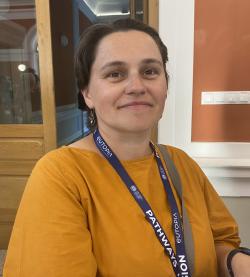
Dr. Ioana-Nicoleta Meleg
Babeș-Bolyai University
Department of Biology
As an ecologist and speleologist, Ioana’s professional and personal mission is to promote ecology as the science that enhances our understanding of the environment and nurture a heightened sense of responsibility for the Earth. She is one of the co-founders of the Emil G. Racoviță Institute for the Study of Life in Extreme Conditions at Babeș-Bolyai University in Cluj-Napoca, Romania, where she conducts her research as a biologist. Ioana’s work primarily revolves around reconstructing past population dynamics through the integration of ancient DNA research and palaeoecological studies. She has been granted fellowships from esteemed institutions, including the Alexander von Humboldt Foundation and the Marie Skłodowska-Curie Actions of the European Union, to support her interdisciplinary research conducted in subsurface environments.
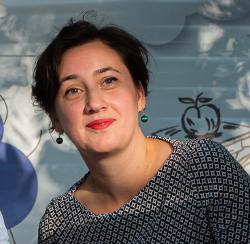
Dr. Oana Sorescu-Iudean
Babeș-Bolyai University
Faculty of Humanities – Centre for Centre for Population Studies
Oana Sorescu-Iudean is a researcher at the Centre for Population Studies of the Babeș-Bolyai University of Cluj-Napoca. She holds a PhD in History from the University of Regensburg (2021), where she was a member of the Graduate School for East and Southeast European Studies. Over the past decade, she has been closely involved with several projects integrating digital humanities approaches with East-Central European historical sources, spanning from historical demography to social and economic history, and is now a member of a COST action dealing with historical health inequalities. She has recently completed a postdoctoral project that provided a data-driven approach to studying the plague in 18th century Transylvania and was awarded a seed funding grant from the Volkswagen Stiftung as part of the seeFField initiative, with the help of which she will develop a larger project on housing and living in 18th-19th century ECE/SEE. Her current research focuses on wealth and health inequalities in early modern and modern Transylvania. She also aims to foster collaboration at ECR level in ECE/SEE to develop and implement larger scale, data-driven projects focusing on serial sources present throughout the former Habsburg Empire.
Cohort 3 – Fellow Presentation

Lect. Dr. Alexandra M. Pop
Babeş-Bolyai University
Faculty of Chemistry and Chemical Engineering
Dr. Alexandra M. Pop is a lecturer at the Faculty of Chemistry and Chemical Engineering, at Babeş-Bolyai University of Cluj-Napoca, Romania. She is conducting her research within the Supramolecular Organic and Organometallic Chemistry Centre and her scientific interest is focused on the synthesis, structural characterization, and investigation of the optical properties of new transition metal complexes containing different organochalcogen ligands. During her career she spend several research stays in Spain (Universidad de Zaragoza, CSIC), Italy (Universita degli Studi di Cagliari), and France (University Rennes 1), conducting multi-disciplinary research (across organic, organometallic, and inorganic chemistry). Currently, she is one of the L’ORÉAL-UNESCO For Women in Science Fellows, awarded within the 2023 Romania National Program.

Dr. Rada Varga
Babeș-Bolyai University
Star-UBB Institute for Advanced Studies
Rada Varga is a Scientific Researcher at the Babeș-Bolyai University from Cluj-Napoca. She holds a PhD in History, with a specialisation in the field of Ancient History. Her principal research interests are in the areas of Roman prosopography, provincial social studies, economic history and digital humanities. She has previously been awarded several fellowships and research projects, which have involved both close collaboration with scholars from a range of European universities and the investigation of complex, interdisciplinary research topics. In the digital humanities field, she has served as the principal investigator on a project that has yielded significant results and continues to be relevant in the field (Romans1by1), taught classes and seminars, and participated in international teaching programs. She is currently the principal investigator of a project examining the material culture of the Batavians from Roman Dacia, a particular group of auxiliary soldiers in the Roman Empire, and the ways in which objects reflect migration, change and identity. This project employs archaeology as a tool to reconstruct historical narrations, and is therefore inherently interdisciplinary and collaborative. It entails chemical analyses of artefacts, statistical renderings and projections of the macro-results. It is noteworthy that Dr. Varga has endeavored to disseminate her research to a wider audience through articles in popular history journals, such as Historia and Ancient warfare.